

Samarium - Sm
Chemical properties of samarium - Health effects of samarium - Environmental effects of samarium
|
|
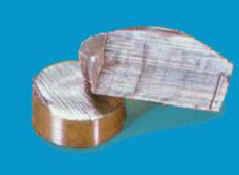
SamariumSamarium is a silvery-white metal belonging to the lanthanide group of the periodic table. It is relatively stable at room temperature in dry air, but it ignites when heated above 150 C and forms an oxide coating in moist air. Like europium samarium has a relatively stable oxidation state (II). Applications Samarium is used as a catalyst in certain organic reactions: the samarium iodide (SmI2) is used by organic research chemists to make synthetic versions of natural products. The oxide, samaria, is used for making special infrared adsorbing glass and cores of carbon arc-lamp electrodes and as a catalyst for the dehydration and dehydrogenation of ethanol. Its compound with cobalt (SmCo5) is used in making a new permanent magnet material. Samarium in the environment Samarium is the fifth most abundant of the rare elements and is almost four times as common as tin. It is never found free in nature, but in contained in many minerals, including monazite, bastnasite and samarskite. Samarium containing ores are found in USA, China, Brazil, India, Australia and Sri Lanka. World production of samarium oxide is about 700 tonnes per year and world-wide reserves are estimated to be around 2 million tonnes. Health effects of samarium
Effects of samarium on the environment
Back to the periodic table of elements. |